Video vs Mocap: What Are We Actually Looking At?
Mocap data provides us with information that video from a single angle tends to hide.
Listen to article
AI narrationReady when you are.
We’ve all seen the swing breakdowns.
Whether it’s the personalities on MLB Network analyzing clips of a surging performer or your favorite social media hitting account pointing out why somebody might be struggling; swing analysis videos are a staple in the world of baseball content, but they might actually be pointing us in the wrong direction if we don’t know what we’re actually looking at.
The issue is that video can be deceiving.
Watching a single camera angle can warp our perception of what is actually occurring in a three-dimensional space. Combine this with a poor understanding of what is going on biomechanically and kinematically during the baseball swing, and you’re left with a lot of coaches willing to die on a hill for something that may actually be an illusion.
Let’s take a look at a classic example of something we’ve probably all seen.
In the video above, we have a nice shot in high quality of a swing from the 2026 AL MVP, Yordan Alvarez. This side angle is probably the most common angle that swings are analyzed from and the primary reason for a whole lot of confusion in the coaching community.
The reason for this misunderstanding is that this specific angle highlights swing qualities that are actually quite passive and makes them look incredibly dynamic, while also downplaying the qualities that serve as primary movers in the swing. It’s a really unfortunate combination that has steered many in the wrong direction when it comes to understanding what's actually occurring in a baseball swing.
The reason why I’m writing this article is because as a Driveline employee, I have access to some really cool tools that help me on a daily basis better understand how hitters are moving. What I did was expand on one of our primary assessment tools, our mocap lab, in order to help explain and bring additional visual aid to what is happening during the swing.
I prototyped two new features in a viewer that can replay real swings captured in Driveline’s lab. The first feature is the ability to view the arms and legs in isolation from rotation of the pelvis and torso. I can hold the body at any frame while replaying how one or both arms moved relative to the rib cage. The legs have the same independent playback controls.
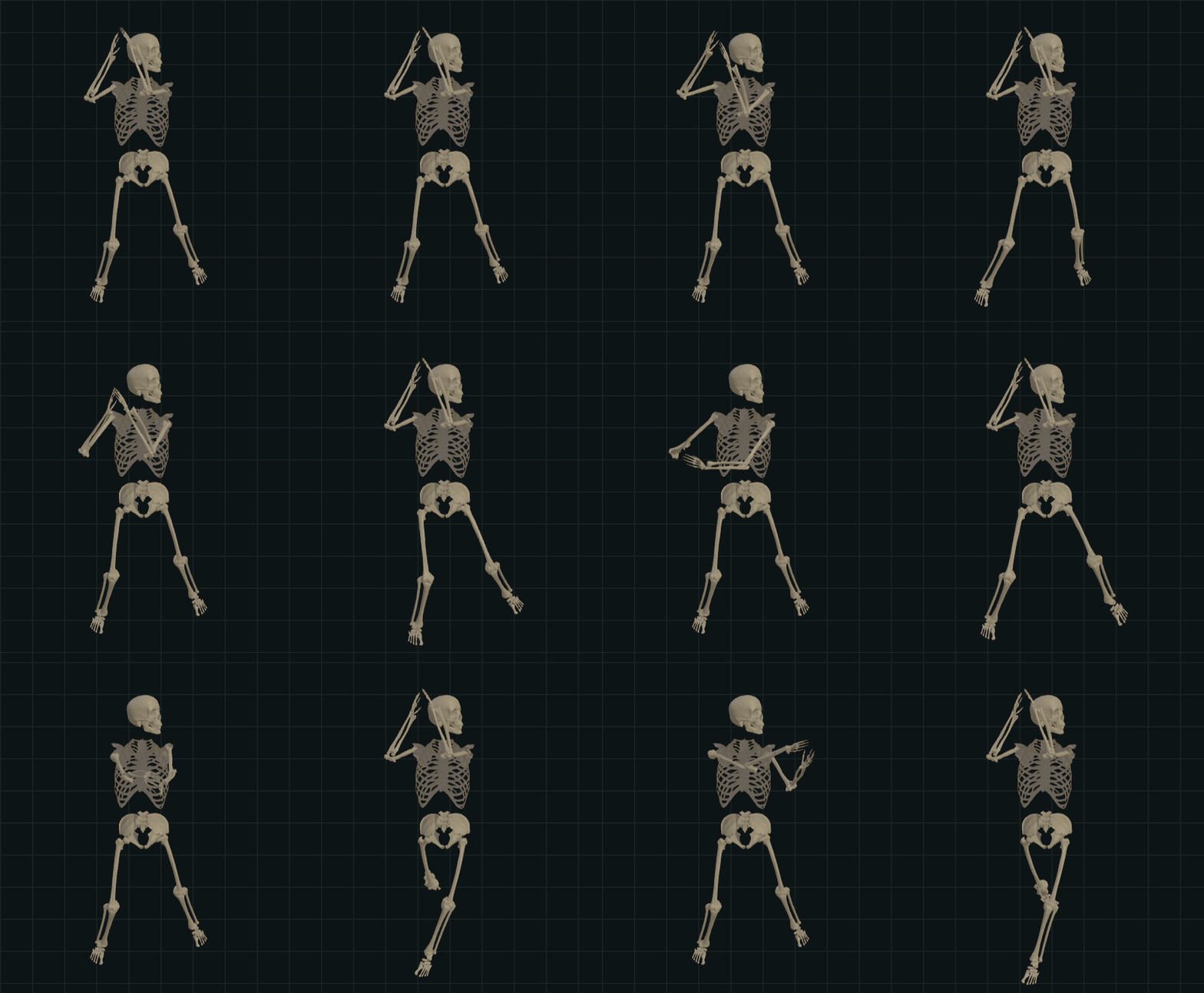
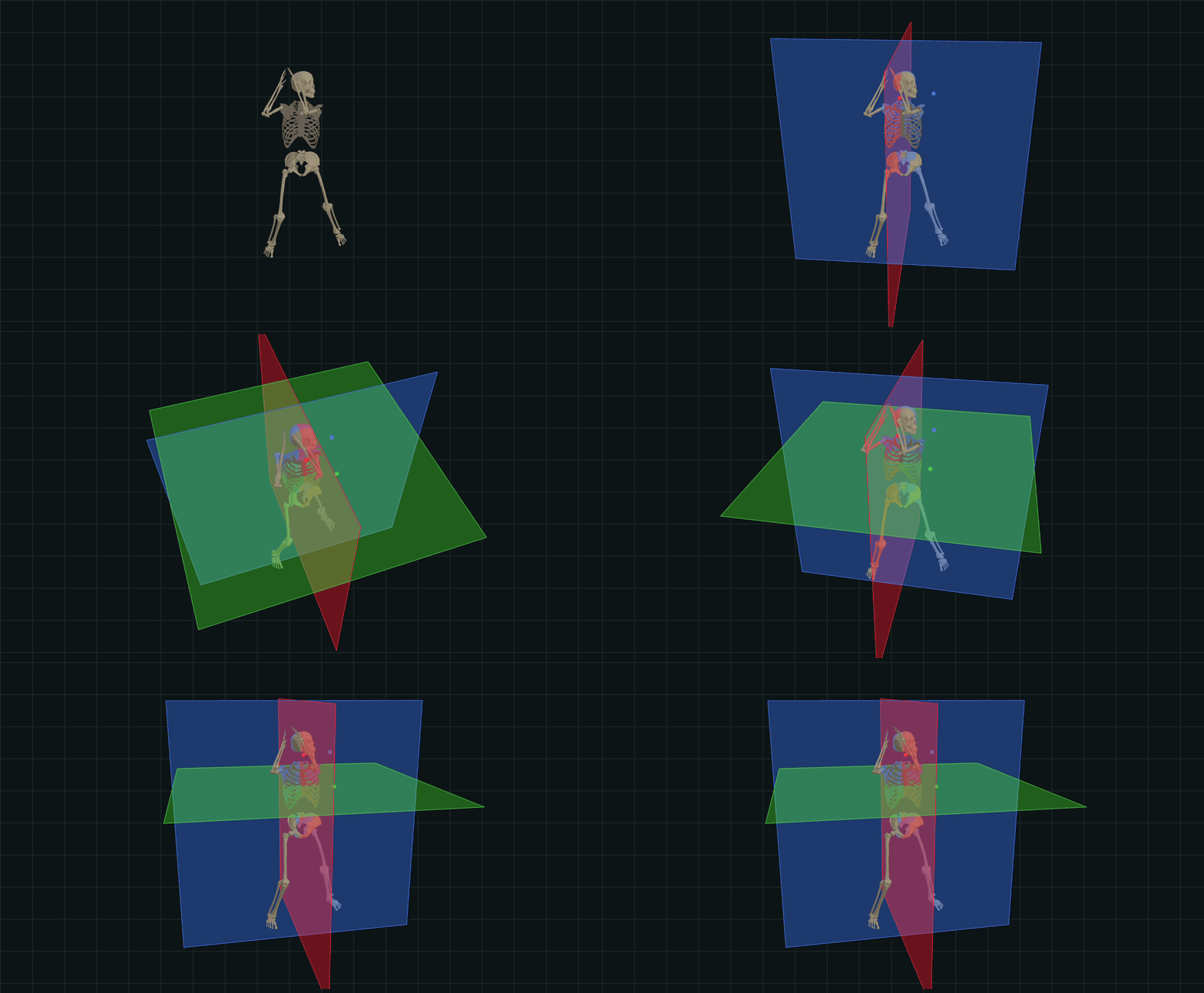
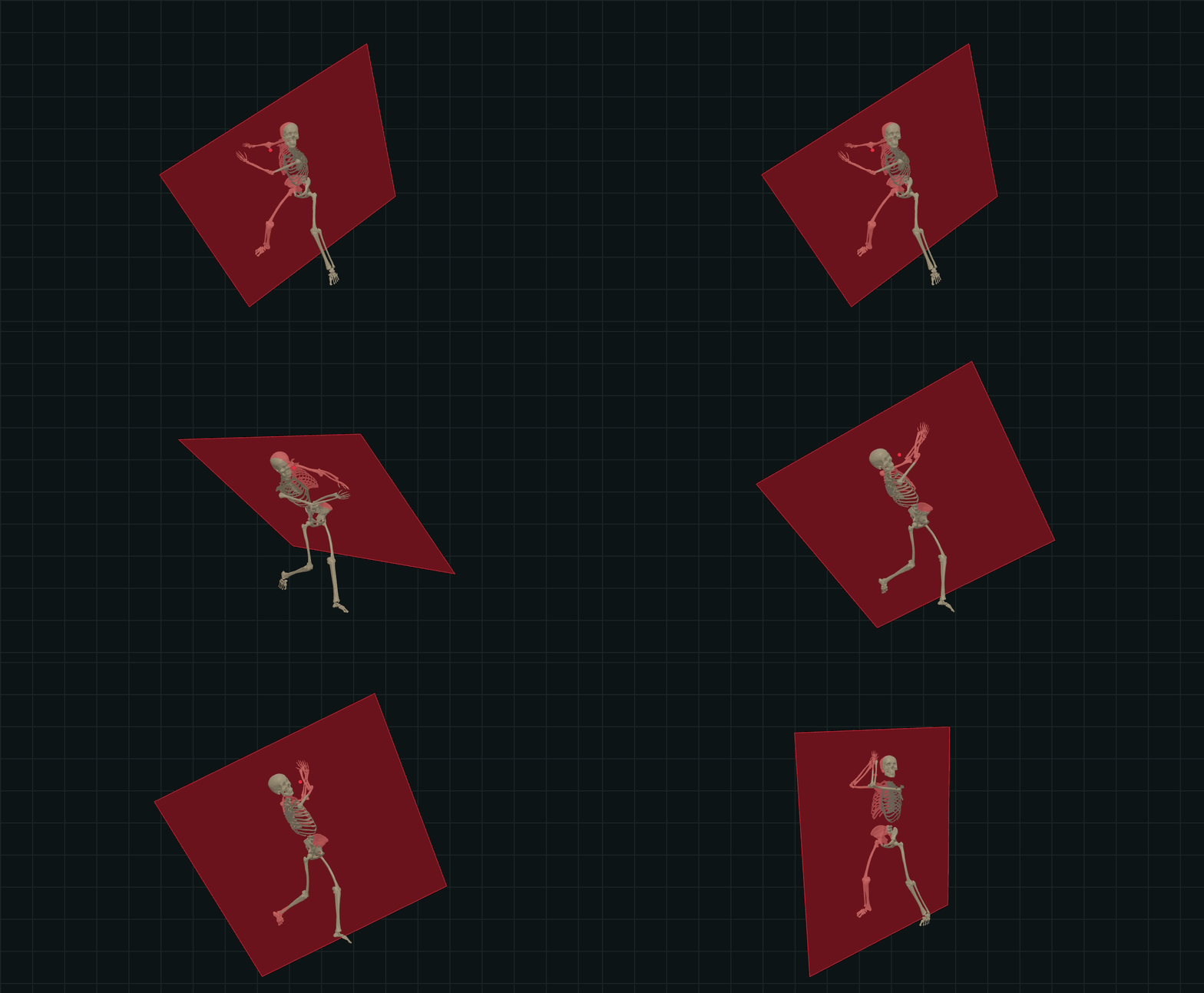
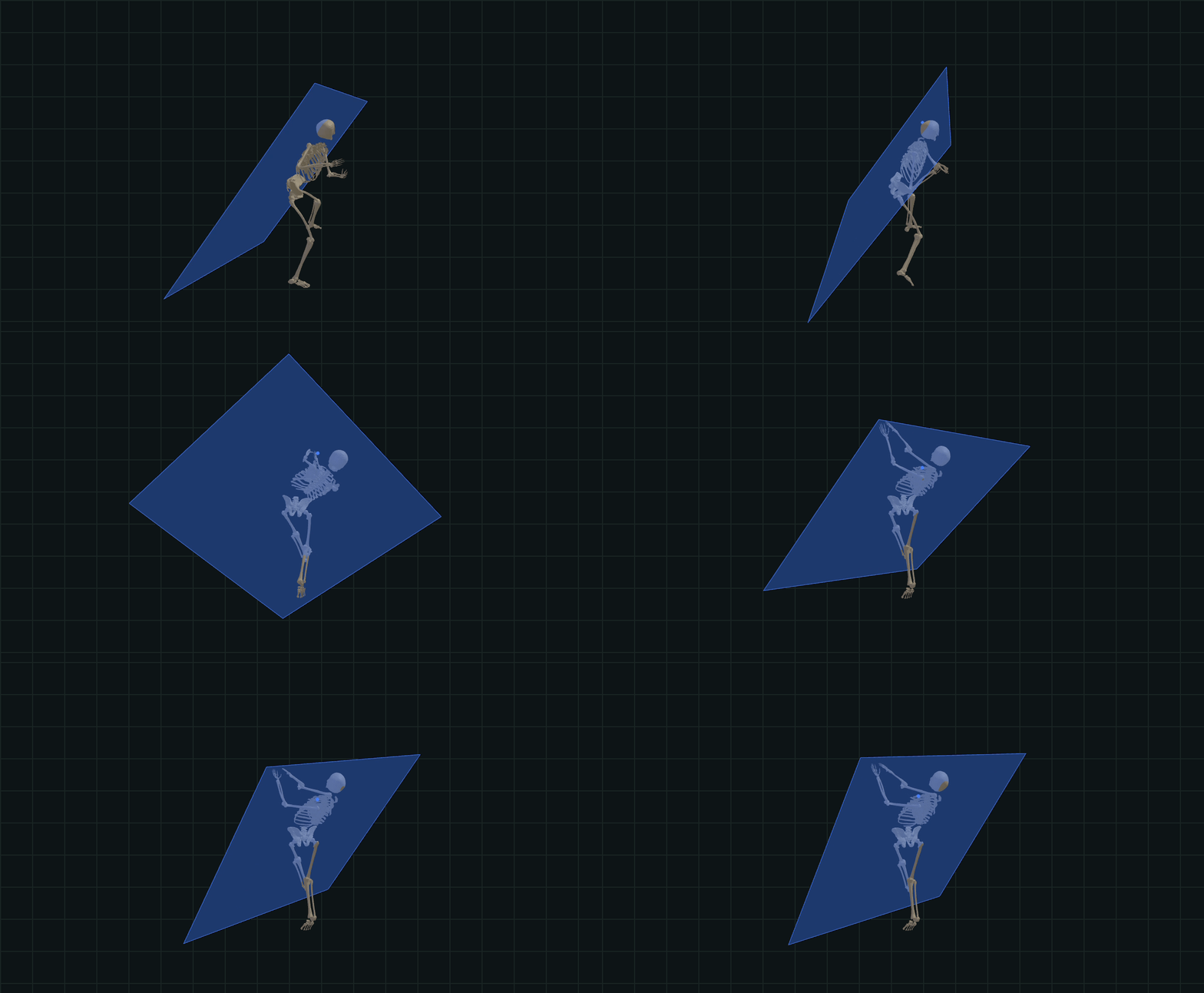
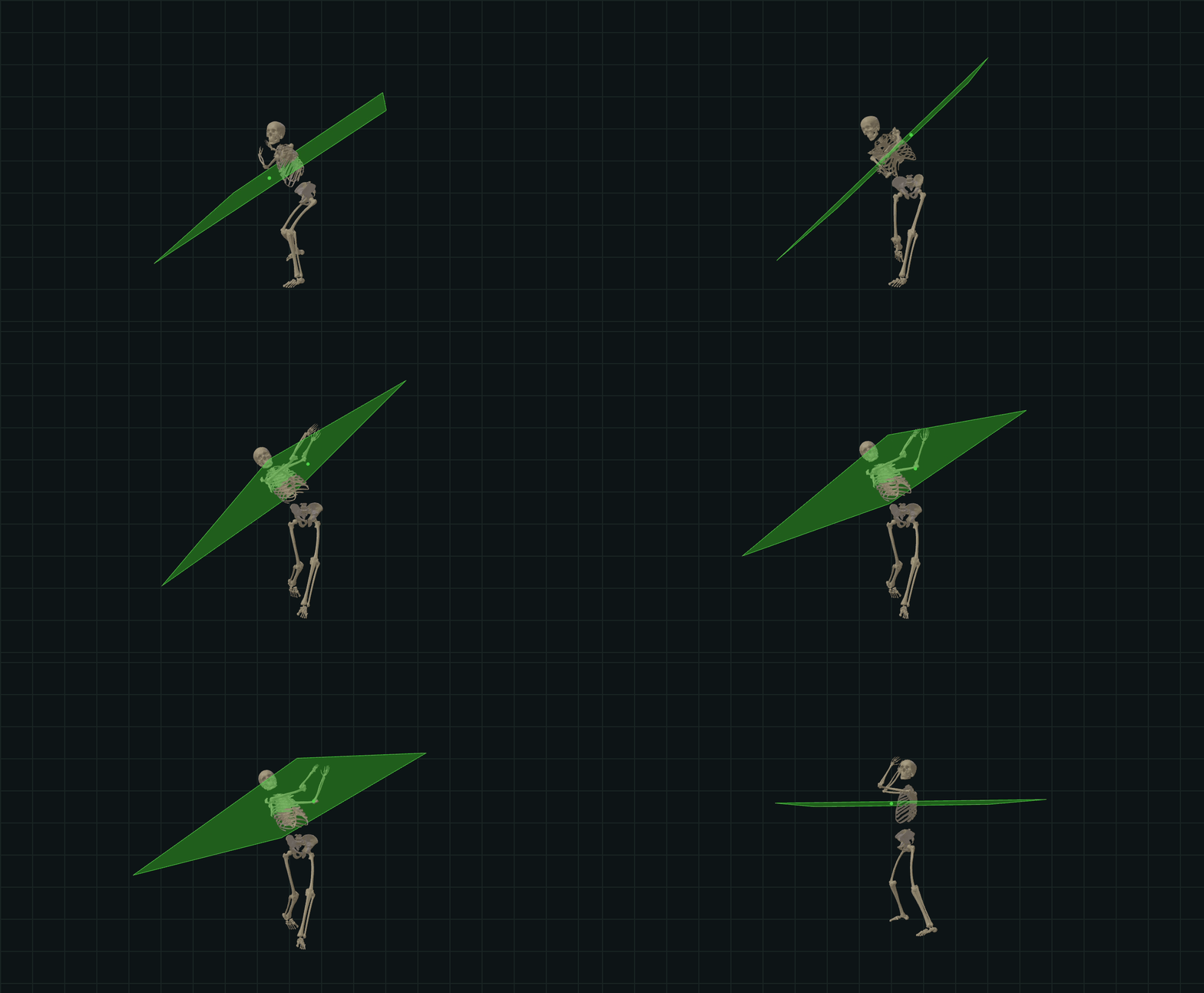
The second feature is the introduction of planes of movement panels that are able to be toggled on and off. These panels are applied to the center point of the torso and manipulated based on the plane of motion. The sagittal plane slider can be moved across the width of the torso, the frontal plane slider can be moved across the depth of the torso, and the transverse plane slider can be moved along the height of the torso. I wanted to include these panels because they provide a great deal of visual context when viewing the information captured in the lab.
My inspiration for these features is a YouTube golf channel called Athletic Motion Golf. They use a mocap platform called GEARS that has these features built in. The owners of AMG, Sean Webb and Mike Granato, have been warning viewers for many years that video of golf swings must be watched with a cautionary eye, and it made me consider the same perspective when it comes to hitting a baseball.
I’ve wanted to develop something like this for a very long time now but simply did not have access to the resources to bring it to life. Working at Driveline has put me in a position where I have finally been able to build this out. My hope is that the coaches at Driveline find this prototype helpful enough to incorporate these features into our biomechanics viewer.
In the upcoming sections, I’ll take a deeper dive into these features and provide some insight into their usefulness.
Extremity Isolation: What Does It Tell Us?
Isolating the arms and legs from the rotation of the torso and pelvis helps us see what those segments are doing on their own.
Go back to the side view of Yordan Alvarez. His hands are easy to follow. They start near the rear shoulder and cover a lot of ground on the way to contact. The pelvis and rib cage are harder to read because part of their turn happens in the depth that the camera flattens. The hands are farther from the rib cage’s axis of rotation, so the turn can carry them through a large arc even while they move relatively little across the chest. From the side, that can look like the arms are sweeping across the body.
The kinematic sequence describes when different parts of the body accelerate and decelerate during the swing. On a sequence graph, time runs from left to right, and each line shows how fast a segment is moving. A rising line means the segment is accelerating. The peak is the instant it’s moving fastest. A falling line means it’s decelerating.
In a proximal-to-distal sequence, those peaks progress from the pelvis to the rib cage, lead arm, lead hand, and bat. Welch and colleagues documented the first part of that pattern in their 3D study of baseball hitting. The hip segment reached its highest rotational speed before the shoulder segment. Watch what happens between those peaks. The pelvis can already be decelerating while the rib cage is still accelerating, even as both continue turning toward contact. The graph shows that overlap. Explaining what caused the rib cage to accelerate takes information about the forces and torques acting on it.
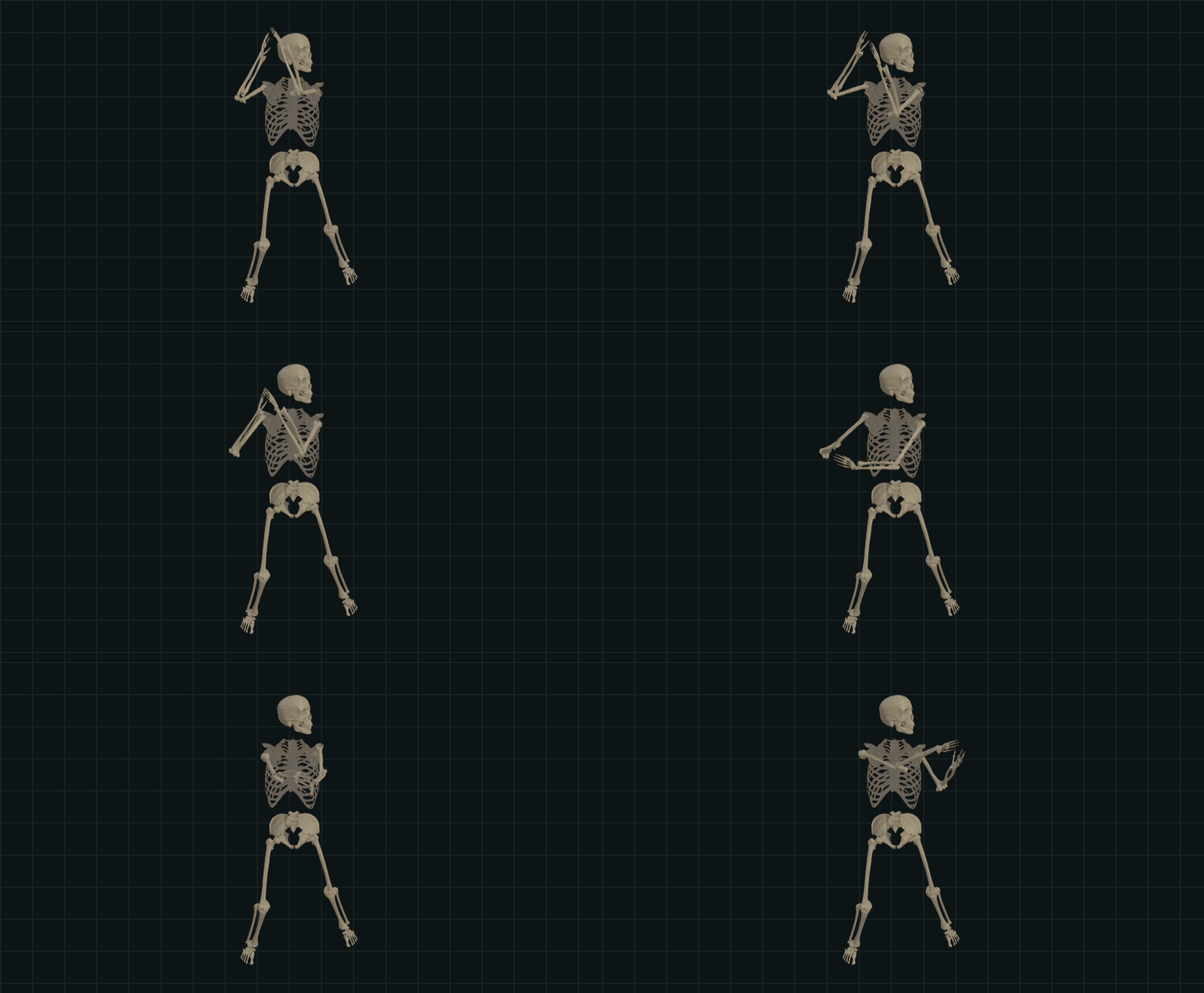
Now watch the isolated-arm replay. Once you take the rotation of the pelvis and torso out of the picture, you can see the upper arms move toward or away from the chest, the shoulder blade draw back to varying degrees, and the elbows extend as the barrel approaches contact. How much the elbows extend depends in part on pitch location and depth of contact.
Let’s move on to how the legs work.
When a hitter pushes against the ground, the ground pushes back. That’s ground reaction force. How much force the ground applies, where it acts, and which direction it points all matter. As the hitter moves into foot plant, the rear leg can help move him forward and start turning the pelvis. Once the lead foot is down, the ground can push back against his forward motion while the pelvis continues to turn. Those forces can create a turning effect on the body, and torques at the hips help control how the pelvis rotates relative to the legs.
In a study of 20 collegiate hitters swinging off a tee, Orishimo and colleagues found that hitters who had larger peak upward and backward forces under the lead foot tended to have higher bat speeds at contact. That’s why I pay attention to what happens after the foot lands. How the hitter interacts with the ground during that part of the swing can tell us more than where the front leg ends up.
Hashimoto and colleagues used motion capture and force plates to estimate mechanical energy flow in professional hitters facing pitched balls. Their analysis pointed to the rear leg and trunk during bat acceleration. They also estimated that energy flowed from the trunk toward the lead leg as the pelvis turned. That gives us another way to think about the lead leg. It takes load while the hitter is turning, and its role can change over the course of the swing.
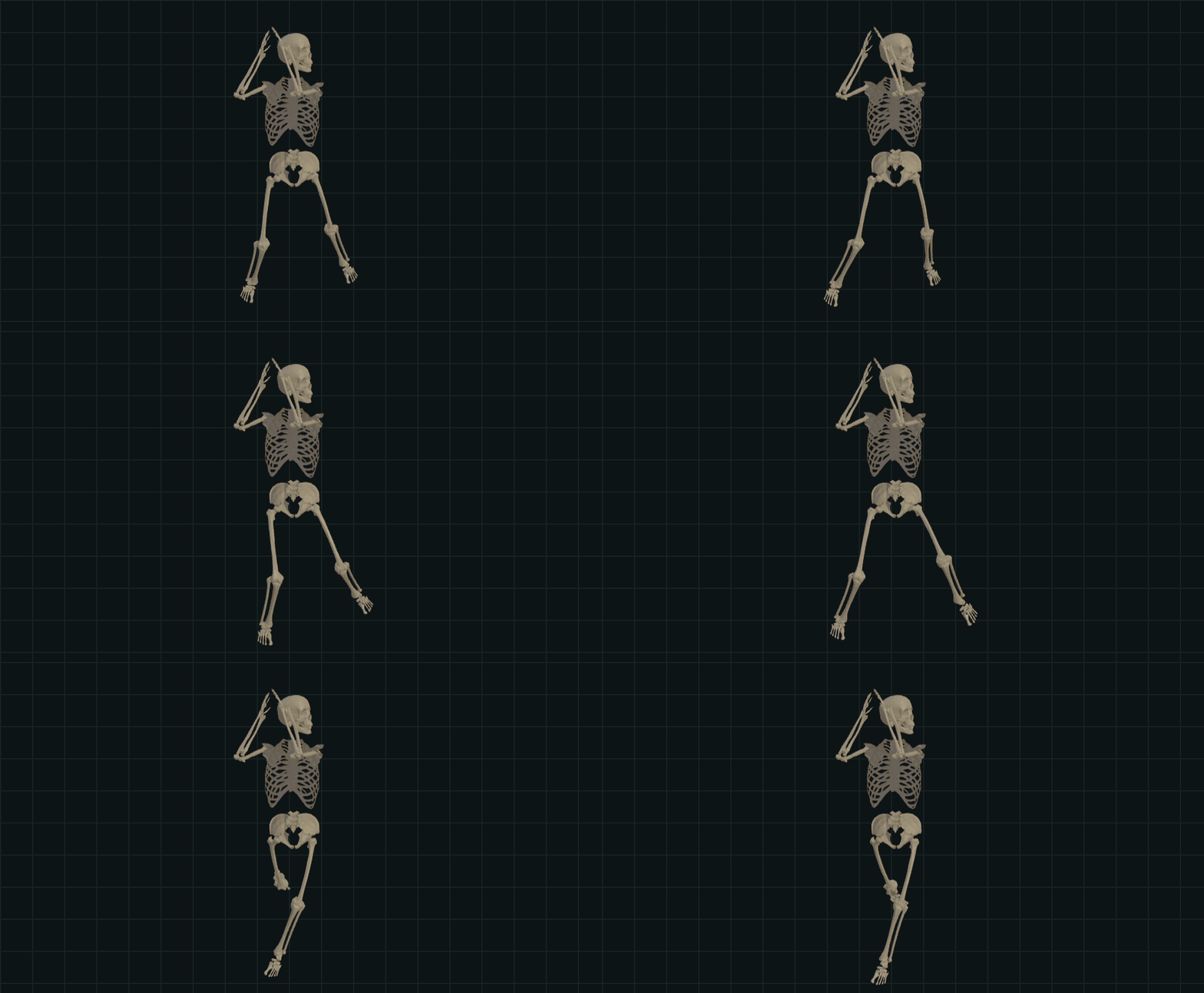
What we see the legs doing in isolation is a result of those ground reaction forces. With no ground to apply force against and no rotation of the pelvis involved, the rear leg applies force posteriorly and the lead leg applies it anteriorly. These opposing applications of force are what would drive the rotation of the pelvis.
Planes of Motion Panels: Visual Reference Points
The panels give me a reference point that moves with the hitter’s rib cage. I can use them to follow the hands relative to the chest, see how much the torso bends forward, and watch how its tilt changes through the swing. I can also slide each panel to line it up with whatever I’m showing the hitter. If we’re talking about the rear elbow, I can move the panel to where the elbow starts and step through the swing so we can both see how it moves relative to that reference.
Sagittal plane. This plane divides the hitter into left and right halves. With this panel centered on the chest, you can see how the hands and arms work in relation to the rear shoulder as the torso rotates into the hitting zone. In the example shown below, the hands stay on the rear-shoulder side of that midline through contact. They cross it late in the follow-through. The panel gives you a way to see how much of that travel happens while the hands are still on the same side of the chest.
Frontal plane. This plane divides the hitter into anterior and posterior halves and makes forward bend easier to see. You can see how the hitter’s posture changes through the turn and how far the torso has rotated by contact.
Transverse plane. This plane divides the hitter into upper and lower halves and shows the axis the hitter rotates around. This plane also represents a swing tilt that is perpendicular to the hitter's torso.
What the Hitter Does vs What the Hitter Feels
You need a working understanding of how the body moves in three dimensions before you can make sense of what you’re seeing on video. Like I mentioned before, the side view makes it easy to follow the hands and easy to underestimate the turn that carries them.
What I like about the mocap data is that it gives us an objective way to describe the movement. We can see where the hands are relative to the chest, how the torso is oriented, and when the elbows extend. How we get a hitter to move a certain way is where coaching gets subjective. Different coaches can have different ways of getting a hitter there, and the same task or cue can do different things for different hitters.
A hitter might think about pulling his hands inside and across his chest. That feel might help him get the barrel to the ball the way he wants. When we measure the swing, his hands might still be on the rear-shoulder side of his chest at contact. If that thought gets him to a better position for the pitch he’s trying to hit, I’m fine with him keeping it.
The key takeaway from all of this is that we should be using the best information possible when assessing hitters. I understand not everyone has access to a mocap lab, and I’m not saying that video is some useless relic of the past. When coaches do choose to use video as a resource to break down the swing, it's just important to keep the context around the video in mind.
Research references
- Welch, C. M., Banks, S. A., Cook, F. F., & Draovitch, P. (1995). Hitting a baseball: A biomechanical description. Journal of Orthopaedic & Sports Physical Therapy, 22(5), 193–201. https://doi.org/10.2519/jospt.1995.22.5.193
- Orishimo, K. F., Kremenic, I. J., Modica, E., Jr., Fukunaga, T., McHugh, M. P., & Bharam, S. (2024). Lower extremity kinematic and kinetic factors associated with bat speed at ball contact during the baseball swing. Sports Biomechanics, 23(12), 3406–3417. https://doi.org/10.1080/14763141.2023.2269418
- Hashimoto, J., La Salle, D. T., Takata, A., Aguinaldo, A., & Wasserberger, K. (2023). Energy flow and ground reaction force predictors of bat swing speed during pitched ball batting in professional baseball players. ISBS Proceedings Archive, 41(1), Article 45. https://commons.nmu.edu/isbs/vol41/iss1/45/